Key Takeaways
Sod gives you an instant, established lawn but costs more up front; seed is cheaper but slow and higher-risk.
Sod can be installed in most of the growing season; seed must be timed tightly to the right window.
Seed saves money on materials but demands weeks of careful watering and weed control before it fills in.
Choose sod for speed, erosion control, and a guaranteed result; choose seed for large areas on a tight budget.
When you're starting a lawn from scratch, the first fork in the road is sod versus seed. Both can produce a beautiful lawn — they just get there very differently. Here's an honest comparison across the things that actually matter: cost, time, effort, and risk.
Cost
Seed wins on upfront cost. A bag of grass seed covers a lot of ground for relatively little money. Sod costs more because you're buying mature grass that's already been grown, harvested, and delivered.
But "cheaper" deserves an asterisk. Seed often needs reseeding of bare patches, more water over a longer period, and weed control while it's vulnerable — costs that add up. For a realistic installed-sod number to compare against, run your yard through our sod cost estimate.
Time to a usable lawn
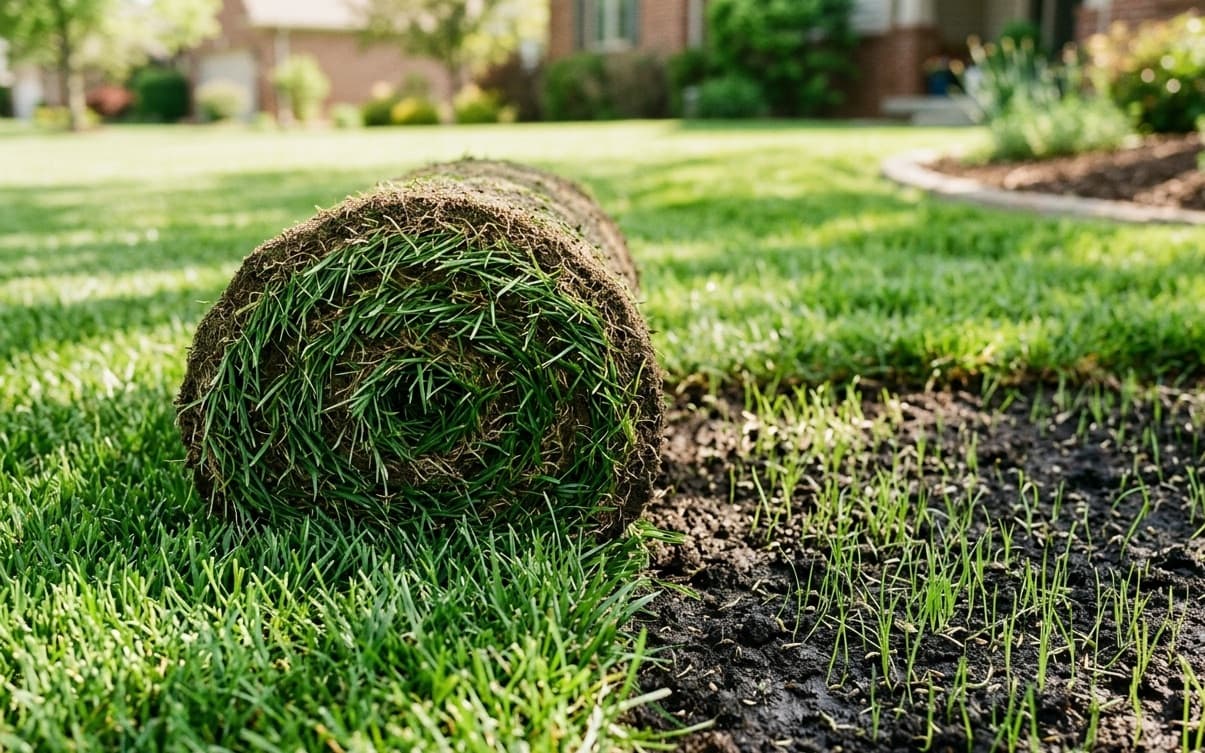
This is sod's biggest advantage. Sod is an instant lawn — it looks finished the day it's installed and is typically usable within 2–3 weeks once rooted. Seed is a waiting game: germination takes days to weeks, and a full, dense lawn can take a full season or more.
Level Up Your Lawn Skills
Once per week we'll send you an interview from someone who has mastered the art of lawn care.
Effort and risk
Seed is sensitive. It can wash away in rain, get eaten by birds, dry out if you miss waterings, or lose to weeds before it establishes. It rewards patience and consistency.
Sod is more forgiving once down. The main effort is the prep and keeping it watered while it roots. (New to that part? See when to mow new sod.)
Both options live or die on ground prep — see how to prepare your yard for sod, most of which applies to seeding too.
Timing
Sod can be laid through most of the growing season, which gives you flexibility. Seed must be sown in a fairly narrow window for your grass type and climate to germinate well — miss it and you're waiting until next season.
So which should you choose?
Choose sod if you want a finished lawn fast, need erosion control on a slope, or want a guaranteed, even result without babysitting germination.
Choose seed if you're covering a large area on a tight budget, you're flexible on timeline, and you're comfortable with weeks of attentive care.
For most homeowners who want results without the risk, sod is the simpler path. If that's you, it takes a couple of minutes to get free quotes from local installers and see what an installed lawn would cost for your yard.
This article was originally published on March 17, 2025
Level Up Your Lawn Skills
Once per week we'll send you an interview from someone who has mastered the art of lawn care.