Key Takeaways
Great sod starts with great prep — most failed lawns trace back to skipped or rushed ground work.
Remove the old lawn completely, then grade so water flows away from your home and foundation.
Test and amend your soil before laying sod; aim for 3–6 inches of quality topsoil.
Prep right before delivery so the ground is ready and the sod goes down fresh.
The difference between a lawn that thrives and one that struggles is almost always what happens before the first roll goes down. Sod is forgiving once it's rooted, but it can't fix bad grading or poor soil. Here's how to prepare your yard so your new lawn establishes fast and lasts.
Step 1: Remove the existing lawn
Start with a clean slate. Laying sod over an existing lawn or weeds traps a layer that blocks root contact and invites disease. Use a sod cutter (rentable) to strip the old grass, then clear roots, rocks, and debris. If you'd rather not do this yourself, it's a standard line item for any pro — see how to choose a sod installer.
Step 2: Grade for drainage
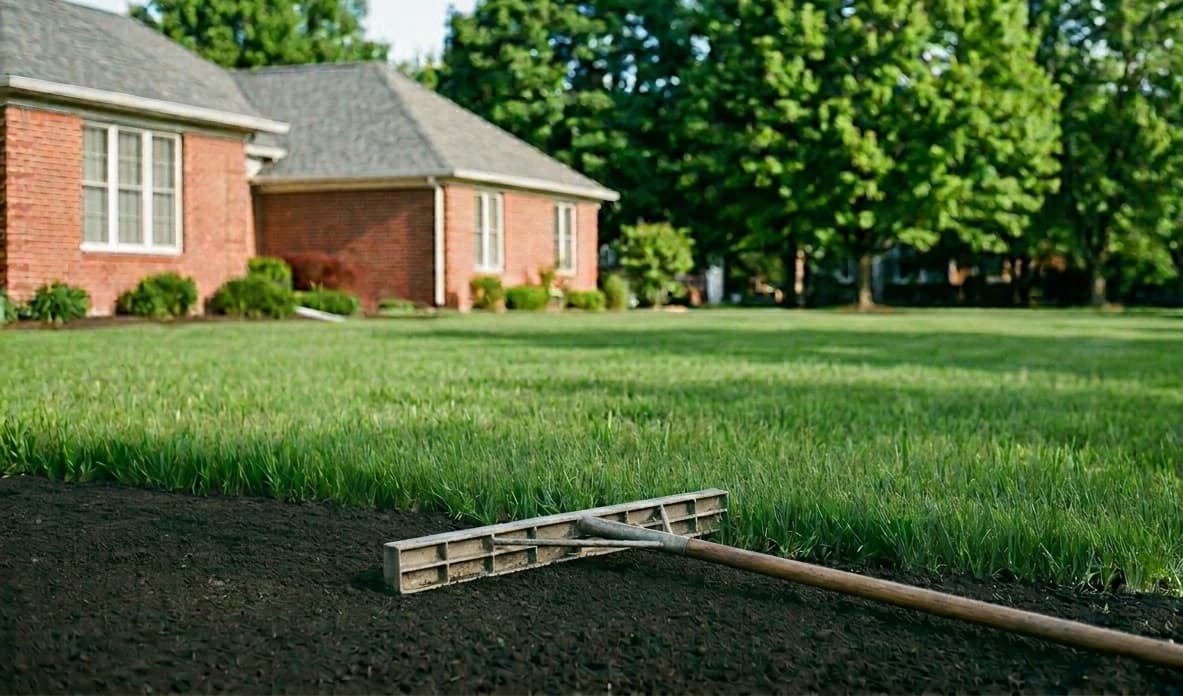
This is the step DIYers most often underestimate. Your yard should slope gently away from your house — about 1–2% grade — so water never pools against the foundation or in low spots that drown new roots. Rake the soil smooth, fill depressions, and check the slope with a level and a long board.
Step 3: Test and amend your soil
Healthy sod needs a healthy base. A cheap soil test tells you your pH and texture so you can amend intelligently:
Level Up Your Lawn Skills
Once per week we'll send you an interview from someone who has mastered the art of lawn care.
Sandy soil drains fast but holds few nutrients — add compost.
Heavy clay holds water and compacts — loosen and amend with organic matter.
Loam is the goal — most amendments aim to move you toward it.
For a deeper look at what to add and how deep to build, see our guide to the best soil for sod.
Step 4: Build your topsoil base
Aim for 3–6 inches of quality topsoil over the graded area. Spread it evenly, then lightly firm it — you want a smooth, settled surface, not fluffy loose dirt that will sink unevenly after watering.
Step 5: Time it right
Sod is perishable. Schedule delivery for the day you're ready to lay it, not days ahead, and don't let pallets bake in the sun. Plan your prep so the ground is finished and lightly moistened just before the sod arrives. Timing matters at the season level too — see our guide to the best time to install sod for the ideal windows by grass type.
Don't have a weekend for this?
Thorough prep is real work, and it's exactly what you're paying for when you hire out. If your yard needs heavy regrading or you'd rather skip the labor, you can request a free quote from local installers and let a crew handle removal, grading, soil, and installation in one go. Either way, respect the prep — it's the foundation your whole lawn depends on.
This article was originally published on May 8, 2025
Level Up Your Lawn Skills
Once per week we'll send you an interview from someone who has mastered the art of lawn care.