Key Takeaways
DIY sod saves on labor but costs you a weekend of hard physical work — and leaves the prep and grading entirely on you.
Professional installation typically runs $1–$2 per square foot in labor on top of materials, but includes grading, soil, and removal.
The riskiest part of any sod job is the prep; getting grading or soil wrong is what kills a DIY lawn.
Hire a pro for large yards, poor drainage, or heavy regrading; DIY makes sense for small, flat, already-prepped areas.
Laying sod looks simple — unroll it like a carpet, water it, done. And for a small, flat, well-prepared yard, DIY can absolutely work. But the part that determines whether your lawn thrives or fails isn't the rolling out; it's everything underneath. Here's an honest comparison so you can decide where your project falls.
What DIY sod installation actually involves
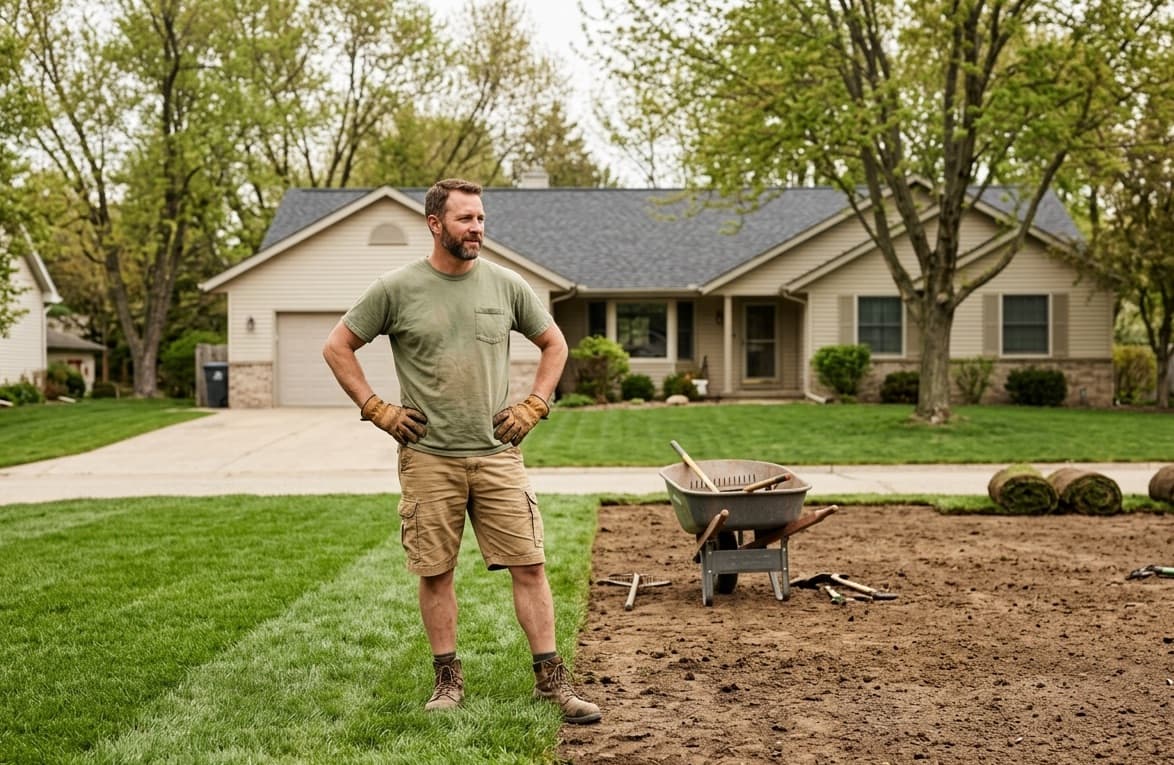
Doing it yourself means you're responsible for the entire process, not just laying the rolls:
Removing the existing lawn and hauling away the debris
Grading the soil so water drains away from your home
Adding and leveling quality topsoil
Ordering the right amount of sod and timing delivery so it doesn't dry out
Laying it tightly in a staggered, brick-like pattern with no gaps
Rolling and watering immediately
It's very doable for a small area — but it's genuinely hard physical work, often a full weekend or two, and it requires renting equipment like a sod cutter and roller. If you want a sense of the gear involved, see our essential tools for laying sod.
What you're really paying a pro for
Professional installers charge for labor on top of materials — usually somewhere around $1–$2 per square foot depending on your area and how much prep is needed. What that buys you is the part most DIYers underestimate:
Level Up Your Lawn Skills
Once per week we'll send you an interview from someone who has mastered the art of lawn care.
Proper grading and drainage, so you don't get pooling or erosion
The right soil base for your grass type
Fast, seamless installation while the sod is still fresh
Disposal of your old lawn
Often, a workmanship warranty
In other words, you're not paying someone to unroll grass — you're paying for the prep and the guarantee that it's done right. If you do go the pro route, our guide on how to choose a sod installer covers the questions to ask and red flags to avoid.
The honest cost comparison
DIY almost always has a lower out-of-pocket cost because you're not paying for labor. But "cheaper" assumes the job goes well. The most common DIY failures — uneven grading, poor soil, gaps that dry out, sod laid too late after delivery — are expensive to fix and sometimes mean buying and laying sod twice.
A useful way to decide: get a real estimate for both paths before committing. You can run your yard through our free sod cost estimate to see materials and installed pricing side by side, then weigh that against a weekend of your own labor.
So which should you choose?
Lean DIY if: your area is small and flat, the soil is already in good shape, you have (or can rent) the equipment, and you're comfortable with physical work.
Hire a pro if: the yard is large, drainage is a problem, significant regrading or soil work is needed, or you simply want a guaranteed result without the labor.
Either way, the lawn lives or dies on the prep. If you're on the fence, it costs nothing to get a few quotes from local installers and compare them against the DIY math — then make the call with real numbers in hand.
This article was originally published on September 22, 2025
Level Up Your Lawn Skills
Once per week we'll send you an interview from someone who has mastered the art of lawn care.